
أيلول/سبتمبر 06, 2026

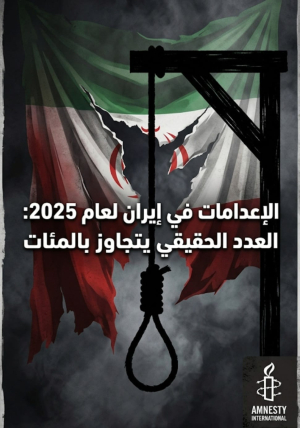
Executions in 2025 soared to the highest figure recorded by Amnesty International since 1981, with 2,707 people executed across 17 countries, revealed the latest annual report from the human rights organization on the global use of the death penalty.

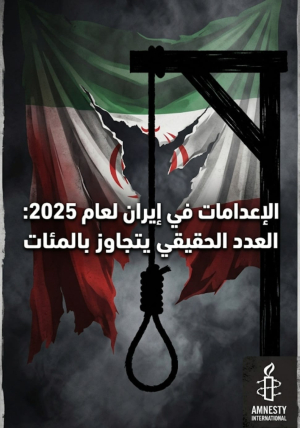
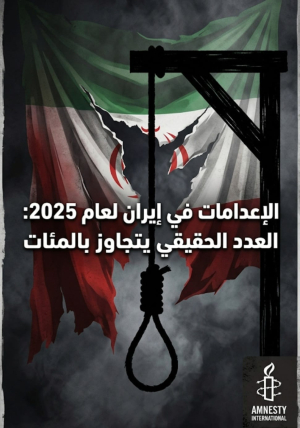
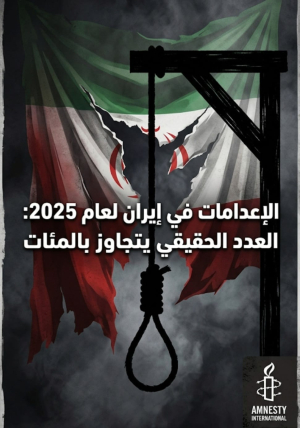
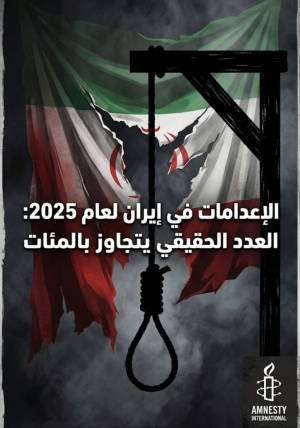
The staggering rise recorded in the report Death Sentences and Executions 2025, was down to a handful of governments determined to rule by fear. Iranian authorities, the main drivers behind the spike, executed at least 2,159 people, more than double its 2024 figure. Elsewhere, Saudi Arabia raised its execution tally to at least 356, using the death penalty extensively for drug-related offences. Executions in Kuwait almost tripled (from 6 to 17), while they near doubled in Egypt (from 13 to 23), Singapore (from 9 to 17), and the United States of America (from 25 to 47). Overall, executions rose by 78%, after at least 1,518 executions were recorded in 2024. The 2025 total does not include the thousands of executions that Amnesty International believes continued to be carried out in China, which remained the world’s lead executioner.

A shameless minority are weaponizing the death penalty to instill fear, crush dissent and punish marginalized communities.

Agnès Callamard, Amnesty International’s Secretary General

“This alarming spike in the use of the death penalty is due to a small, isolated group of states willing to carry out executions at all costs, despite the continued global trend towards abolition. From China, Iran, North Korea and Saudi Arabia to Yemen, Kuwait, Singapore and the USA, this shameless minority are weaponizing the death penalty to instil fear, crush dissent and show the strength state institutions have over disadvantaged people and marginalized communities,” said Agnès Callamard, Amnesty International’s Secretary General.

The resurgence of highly punitive approaches in the “war on drugs” drove efforts to expand the use of the death penalty. This was reflected in the number of executions, with close to half (1,257 or 46%) of all known executions recorded for drug-related offences: in China (+), Iran (998), Kuwait (2), Saudi Arabia (240) and Singapore (15). Algeria, Kuwait, and the Maldives made legislative efforts to expand the scope of the death penalty to include drug-related offences.

The government of Burkina Faso adopted a draft bill that included reinstating the death penalty for offences such as “high treason,” “terrorism,” and “acts of espionage”, while the authorities in Chad established a commission to review matters related to the death penalty – including its reinstatement.


Executions carried out by handful of countries


While executions surged, executing countries remain an isolated minority. China, Egypt, Iran, Iraq, North Korea, Saudi Arabia, Somalia, USA, Viet Nam and Yemen are the same 10 countries known to have carried out executions every year in the last five years and that have consistently shown disregard for safeguards established under international human rights law and standards.

Four countries resumed executions last year (Japan, South Sudan, Taiwan and United Arab Emirates), bringing the total number of executing countries to 17.

It’s time for executing countries to step into line with the rest of the world and leave this abhorrent practice in the past.

Agnès Callamard

Progress was made elsewhere around the world, proving hope is stronger than fear.

No executions or death sentences were recorded in Europe and Central Asia. For the 17th consecutive year, the USA was the only country in the Americas to execute people, with close to half of all US executions carried out in Florida. Executions in Sub-Saharan Africa were confined to Somalia and South Sudan. Afghanistan was the only country in South Asia to pursue executions; Singapore and Viet Nam were the only countries known to do so in Southeast Asia. Tonga was the only country in the Pacific to retain the death penalty in law.


The flame of abolition continues to burn

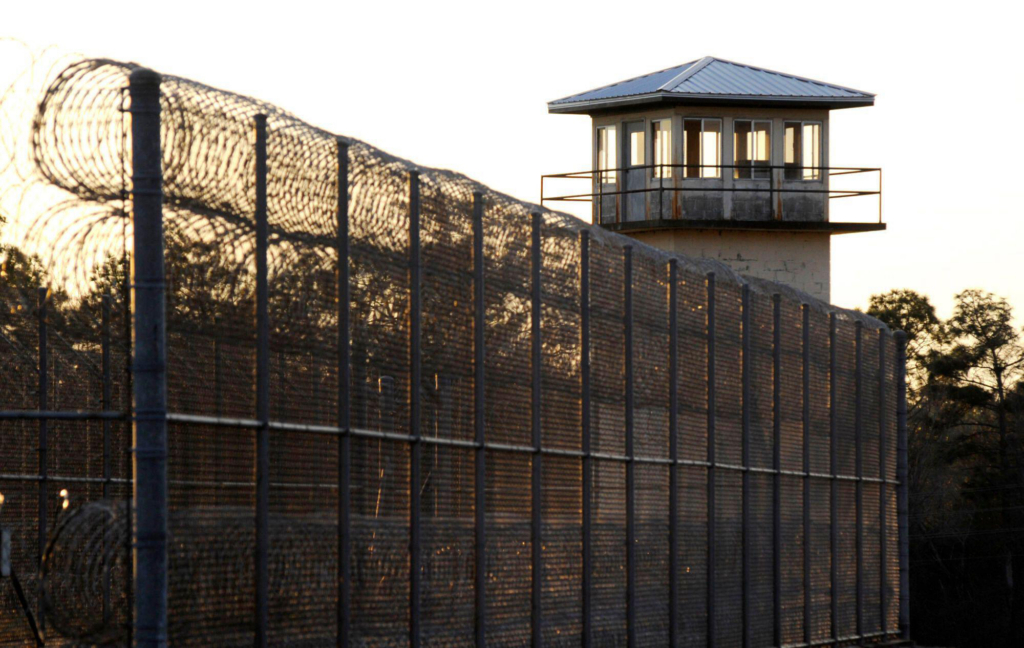
A prison fence, covered in barbed wire, with a watch tower at the end.
Holman Correctional Facility, Atmore, Alabama where Rocky Myers was transferred after his conviction. Rocky Myers faced the death penalty in Alabama and became one of the focuses of Amnesty International’s global Write for Rights Campaign. His sentence was finally commuted in 2025.

When Amnesty International started its work against the death penalty in 1977, only 16 countries had abolished it. Today, that number has risen to 113 – more than half the world’s countries, while more than two-thirds are abolitionist in law or practice.

Against a backdrop of predatory behaviours, fear and hate, some countries took steps demonstrating that, with continued pressure and determination, global abolition is within reach. Authorities in Viet Nam abolished the death penalty for eight offences, including drug transportation, bribery, and embezzlement, while Gambia abolished the death penalty for murder, treason and other offences against the state. In a historic move, the Governor of Alabama, Kay Ivey, granted clemency to Rocky Myers – the first clemency granted to a Black person on death row in the state.

We must keep the flame of abolition burning bright until the world is entirely free from the shadows of the gallows.

Agnès Callamard

In Lebanon and Nigeria, bills were introduced to abolish the death penalty, while the Constitutional Court of Kyrgyzstan declared attempts to reintroduce the death penalty as unconstitutional.

“With human rights under threat around the world, millions of people continue to fight against the death penalty each year in a powerful demonstration of our shared humanity,” said Agnès Callamard. “Total abolition is possible if we all stand strong against the isolated few. We must keep the flame of abolition burning bright until the world is entirely free from the shadows of the gallows.”

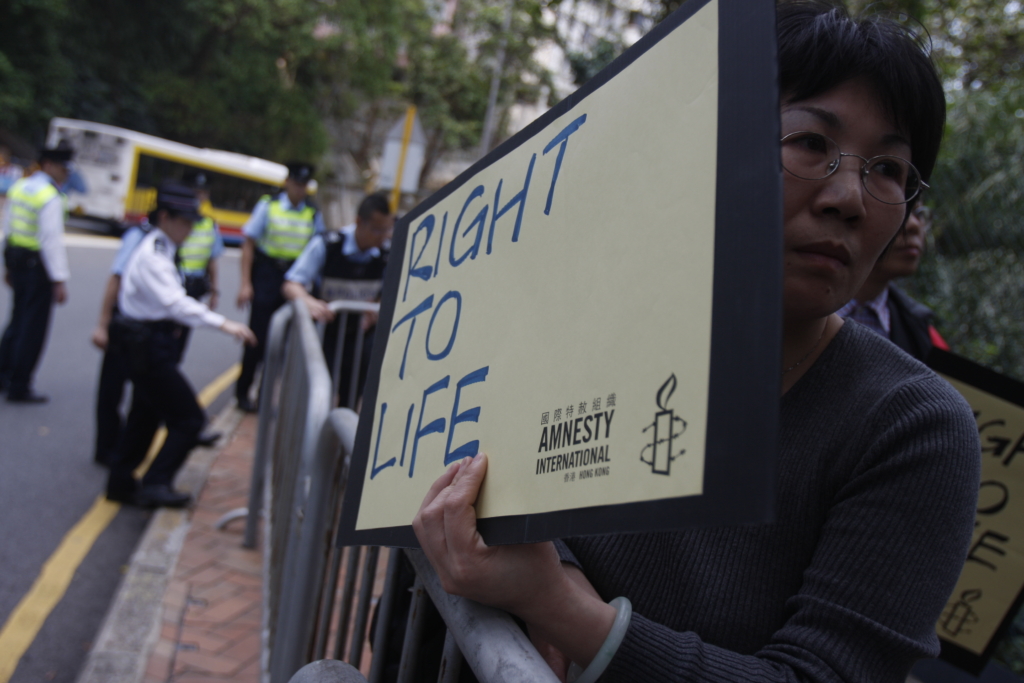
Hong Kong launch of Death Penalty report, Hong Kong 30 March 2008

Amnesty-Mahnwache für Pannir Selvam vor der Botschaft Singapurs in Malaysias Hauptstadt Kuala Lumpur (6. Mai 2025). Der malaysische Staatsbürger war in Singapur zum Tode verurteilt und am 8. Oktober 2025 hingerichtet worden.

Im Jahr 2025 wurden mindestens 2.707 Menschen in 17 Ländern hingerichtet – so viele wie seit 1981 nicht mehr. Das zeigt der aktuelle Amnesty-Bericht "Death Sentences and Executions 2025" zur weltweiten Anwendung der Todesstrafe. Der dramatische Anstieg von Hinrichtungen um 78 Prozent im Vergleich zum Vorjahr geht vor allem auf wenige Staaten zurück, die die Todesstrafe gezielt als Instrument der Einschüchterung einsetzen, allen voran China, Iran und Saudi-Arabien. Mehr als zwei Drittel aller Länder weltweit haben die Todesstrafe hingegen gesetzlich oder in der Praxis abgeschafft.

"Die Todesstrafe ist die extremste Form staatlicher Gewalt: Sie ist unmenschlich, endgültig und lässt keinen Raum für Fehler oder Gerechtigkeit. Dass immer noch Regierungen darauf setzen, zeigt eine erschreckende Missachtung des Rechts auf Leben", sagt Julia Duchrow, Generalsekretärin von Amnesty International Deutschland. "In Iran können wir aktuell auf bedrückendste Weise mitverfolgen, wie Staaten die Todesstrafe systematisch einsetzen, um Menschen zum Schweigen zu bringen, benachteiligte Gruppen zu unterdrücken und Angst zu verbreiten. Das ist ein eklatanter Missbrauch staatlicher Macht und ein Angriff auf jede Form von Menschlichkeit und Rechtsstaatlichkeit."

China und Iran weiterhin größte Vollstrecker – tatsächliche Zahlen deutlich höher

Die aktuellen Höchstzahlen sind auf Rückschritte in wenigen Staaten zurückzuführen. Allein die Behörden der Islamischen Republik Iran richteten im Jahr 2025 mindestens 2.159 Menschen hin – mehr als doppelt so viele wie 2024. In Saudi-Arabien wurden mindestens 356 Exekutionen vollzogen. Deutliche Zuwächse verzeichneten unter anderem auch die USA (von 35 auf 47), Singapur (von 9 auf 17), Ägypten (von 13 auf 23) und Kuwait (von 6 auf 17). Weitere Staaten, in denen 2025 die Todesstrafe vollstreckt wurde, waren Afghanistan, Irak, Japan, Jemen, Nordkorea, Somalia, Südsudan, Taiwan, die Vereinigten Arabischen Emirate und Vietnam. Zur Anwendung kamen dabei Enthauptung, Erhängen, tödliche Injektion, Erschießen und Stickstoffgas-Erstickung.

Die im Bericht dokumentierten 2.707 Hinrichtungen weltweit bilden allerdings nur einen Teil des tatsächlichen Ausmaßes ab: Nicht erfasst sind Exekutionen in China, wo entsprechende Daten als Staatsgeheimnis gelten. Jährlich werden in China Schätzungen von Amnesty International zufolge tausende Personen und damit die meisten Menschen weltweit hingerichtet.

Verstoß gegen internationales Recht: Fast jede zweite Hinrichtung wegen Drogendelikten

Fast die Hälfte aller dokumentierten Hinrichtungen – 1.257 Fälle bzw. 46 Prozent – erfolgte 2025 im Zusammenhang mit Drogendelikten. In Iran betraf das 998 Hinrichtungen, in Saudi-Arabien 240, 15 in Singapur und 2 in Kuwait. In einigen Ländern haben Strafmaßnahmen im sogenannten "Krieg gegen Drogen" die Ausweitung der Todesstrafe weiter vorangetrieben. So legten Algerien, Kuwait und die Malediven Gesetzentwürfe vor, um den Anwendungsbereich der Todesstrafe auf Drogendelikte auszudehnen. In anderen Ländern wie Burkina Faso und Tschad steht zudem die Wiedereinführung der Todesstrafe für Straftaten wie "Hochverrat", "Terrorismus" und "Spionage" bevor.

Im Fokus: Hinrichtungen im Zusammenhang mit Drogendelikten 2025

Nach internationalen Menschenrechtsstandards darf die Todesstrafe – sofern sie noch angewendet wird – ausschließlich bei "schwersten Verbrechen" verhängt werden. Julia Duchrow erklärt: "Die Todesstrafe verletzt die Würde des Menschen immer in ihrem Kern. Doch Menschen für Straftaten wie Drogendelikte hinzurichten, ist zusätzlich ein klarer Bruch des Völkerrechts. Diese Praxis ist nicht nur rechtswidrig, sondern zutiefst menschenverachtend."

Globale Abschaffung ist möglich: Nur eine Minderheit von Staaten hält an Todesstrafe fest

Trotz des drastischen Anstiegs von Exekutionen insbesondere in der Region Naher und Mittlerer Osten bleibt die Anwendung der Todesstrafe global die Ausnahme: In Europa und Zentralasien wurden 2025 keine Todesurteile verhängt und keine Hinrichtungen vollstreckt. Auf dem amerikanischen Kontinent waren die USA im 17. Jahr in Folge das einzige Land, in dem Menschen hingerichtet wurden, und in Afrika führten 2025 nur drei von 54 Staaten Hinrichtungen durch.

Zudem machen Entwicklungen weltweit deutlich, dass die globale Abschaffung der Todesstrafe mit Ausdauer und entschlossenem Einsatz möglich ist. So haben die Behörden in Vietnam und Gambia die Todesstrafe für zahlreiche Straftaten abgeschafft. In einem historischen Schritt hat die Gouverneurin von Alabama Rocky Myers begnadigt – die erste Begnadigung eines Schwarzen Menschen im Todestrakt in diesem US-Bundesstaat. Im Libanon und in Nigeria wurden Gesetzesentwürfe zur Abschaffung der Todesstrafe eingebracht, und in Kirgisistan erklärte das Verfassungsgericht Versuche zur Wiedereinführung der Todesstrafe für verfassungswidrig.

Julia Duchrow, Generalsekretärin von Amnesty International Deutschland: "Die Staaten, die weiterhin hinrichten, stehen zunehmend isoliert da. Als Amnesty International 1977 die Arbeit gegen die Todesstrafe aufnahm, hatten nur 16 Staaten die Todesstrafe abgeschafft. Heute sind es 113 – mehr als die Hälfte aller Länder der Welt. Weltweit setzt sich die Erkenntnis durch, dass die Todesstrafe grausam, diskriminierend und wirkungslos ist – und deshalb keinen Platz mehr in unserer Zeit haben darf."
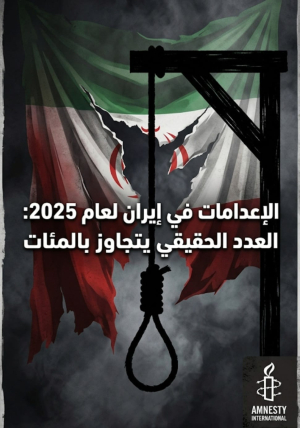
 

Ahwazie des Droits de l'Homme (O.A.D.H.) tire la sonnette d'alarme et affirme que le nombre réel d'exécutions en Iran dépasse de plusieurs centaines les chiffres officiels

​L'Organisation Ahwazie des Droits de l'Homme (O.A.D.H.) exprime sa profonde préoccupation face à la hausse sans précédent des taux d'exécution des peines de mort appliquées par les autorités iraniennes. L'organisation souligne que la politique de répression et d'intimidation a atteint des niveaux critiques et alarmants, qualifiant ces actes de crimes contre l'humanité.
​Cette déclaration intervient en réponse au Rapport Annuel 2025 publié par Amnesty International, qui révèle un recul brutal et effrayant de la situation des droits de l'homme en Iran. Selon les chiffres documentés dans ce rapport annuel, les autorités iraniennes ont exécuté au moins 2 159 personnes au cours de la seule année 2025. Cela représente un bond terrifiant, équivalant à plus du double du nombre enregistré en 2024.

​Dans ce contexte, l'Organisation Ahwazie des Droits de l'Homme (O.A.D.H.) assure à l'opinion publique mondiale et aux institutions internationales que ce chiffre effroyable (2 159 exécutions) ne reflète pas pleinement la tragique réalité sur le terrain.
​Déclaration de l'organisation : « Nous affirmons avec une certitude absolue que le nombre réel d'exécutions en Iran en 2025 dépasse de plusieurs centaines ce chiffre annoncé. Les autorités iraniennes imposent une politique de black-out médiatique et de secret absolu, procédant à des centaines d'exécutions secrètes dans l'ombre des prisons, sans aucune annonce officielle et sans en informer les familles des victimes ou leurs avocats — en particulier dans les régions et provinces opprimées, au premier rang desquelles l'Ahwaz, le Baloutchistan et le Kurdistan. »
​Les autorités de Téhéran exploitent l'absence de surveillance internationale indépendante pour éliminer les militants politiques et les défenseurs des droits de l'homme par le biais de simulacres de procès dénués des normes minimales de la justice internationale. Ces procès s'appuient sur des aveux forcés extorqués sous la torture la plus barbare, dans le but d'instiller la peur et d'étouffer toute voix réclamant la liberté et la justice.

​L'Organisation Ahwazie des Droits de l'Homme (O.A.D.H.) appelle la communauté internationale, le Conseil des droits de l'homme des Nations Unies et les rapporteurs spéciaux à intervenir immédiatement et à exercer une pression concrète et sérieuse sur le régime iranien afin de stopper cette « machine à tuer de masse » qui plane sur les peuples. L'organisation insiste sur la nécessité de mettre en place une commission internationale indépendante d'établissement des faits pour enquêter sur la réalité et révéler les prisons secrètes établies en Ahwaz et dans d'autres régions, où des milliers d'innocents font face à l'ombre d'une exécution politique systématique.

Alahwaz Organization for Human Rights (A.O.H.R) Raises the Alarm, Confirming That the Real Number of Executions in Iran Exceeds Official Figures by Hundreds

​The Alahwaz Organization for Human Rights (A.O.H.R) expresses its deep concern over the unprecedented surge in the execution rates of death sentences carried out by the Iranian authorities. The organization notes that the policy of oppression and intimidation has reached critical and dangerous levels, classifying these actions as crimes against humanity.
​This statement comes in response to the 2025 Annual Report issued by Amnesty International, which reveals a sharp and frightening regression in the human rights situation inside Iran. According to the documented figures in this annual report, the Iranian authorities executed at least 2,159 
​In this context, the Alahwaz Organization for Human Rights (A.O.H.R) assures the global public opinion and international institutions that this terrifying figure (2,159 executions) does not fully reflect the tragic reality on the ground.
​Organization Statement: "We confirm with absolute certainty that the actual number of executions in Iran during 2025 exceeds this announced figure by hundreds. The Iranian authorities employ a policy of systematic media blackout and secrecy, carrying out hundreds of secret executions within the dark walls of prisons without official announcements, and without notifying the victims' families or their lawyers—particularly in the oppressed regions and provinces, foremost among them Ahwaz, Balochistan, and Kurdistan."
​The authorities in Tehran exploit the absence of independent international monitoring to eliminate political activists and human rights defenders through sham trials that lack the minimum standards of international justice. These trials rely on forced confessions extracted under brutal torture, aimed at instilling fear and crushing any voice demanding freedom and justice.

​The Alahwaz Organization for Human Rights (A.O.H.R) calls upon the international community, the UN Human Rights Council, and special rapporteurs to intervene immediately and exert tangible, serious pressure on the Iranian regime to halt this "mass killing machine" looming over the peoples. The organization stresses the need to establish an independent international fact-finding committee to investigate the truth and uncover the secret prisons established in Ahwaz and other regions, where thousands of innocent people face the shadow of systematic political execution.

Der Ahwazische Verein für Menschenrechte e.V. schlägt Alarm und betont, dass die tatsächliche Zahl der Hinrichtungen im Iran um Hunderte über den offiziellen Angaben liegt


​Der Ahwazische Verein für Menschenrechte e.V. äußert seine tiefe Besorgnis über den beispiellosen Anstieg der Vollstreckungsraten von Todesurteilen durch die iranischen Behörden. Der Verein weist darauf hin, dass die Politik der Unterdrückung und Einschüchterung ein alarmierendes Ausmaß erreicht hat, das als Verbrechen gegen die Menschlichkeit einzustufen ist.

​Dies geschieht als Reaktion auf den aktuellen Jahresbericht für das Jahr 2025 von Amnesty International, der einen drastischen und erschreckenden Rückschritt im Bereich der Menschenrechte im Iran offenlegt. Nach den dokumentierten Zahlen in diesem Jahresbericht haben die iranischen Behörden allein im Jahr 2025 mindestens 2.159 Menschen hingerichtet. Dies stellt einen grausamen Sprung dar, der mehr als dem Doppelten der im Jahr 2024 verzeichneten Zahl entspricht.

​In diesem Zusammenhang versichert Der Ahwazische Verein für Menschenrechte e.V. der Weltöffentlichkeit und den internationalen Institutionen, dass diese erschreckende Zahl (2.159 Hinrichtungen) das tatsächliche, tragische Ausmaß der Realität vor Ort keineswegs vollständig widerspiegelt.
​Erklärung des Vereins: „Wir betonen mit aller Entschiedenheit, dass die tatsächliche Zahl der Hinrichtungen im Iran im Jahr 2025 die öffentlich bekannte Zahl um Hunderte übersteigt. Die iranischen Behörden betreiben eine systematische Medienzensur und Geheimhaltung. Sie vollstrecken Hunderte von geheimen Hinrichtungen in den dunklen Kellern der Gefängnisse, ohne offizielle Ankündigung und ohne die Familien der Opfer oder deren Anwälte zu informieren – insbesondere in den unterdrückten Regionen und Provinzen, allen voran in Al-Ahwaz(Chuzestan,Bushehr,Ielam,Hormozghan), Belutschistan und Kurdistan.“
​Die Behörden in Teheran nutzen das Fehlen einer unabhängigen internationalen Überwachung schamlos aus, um politische Aktivisten und Menschenrechtsverteidiger durch Schauprozesse zu eliminieren. Diese Prozesse entbehren jeglicher Mindeststandards internationaler Justiz und stützen sich auf erzwungene Geständnisse, die unter brutaler Folter erpresst wurden. Ziel ist es, Angst und Schrecken zu verbreiten und jede Stimme zu ersticken, die nach Freiheit und Gerechtigkeit ruft.

​Der Ahwazische Verein für Menschenrechte e.V. fordert die internationale Gemeinschaft, den UN-Menschenrechtsrat und die Sonderberichterstatter auf, unverzüglich zu intervenieren und spürbaren, ernsthaften Druck auf das iranische Regime auszuüben, um diese „Maschine des Massenmords“, die über den Völkern schwebt, zu stoppen. Der Verein unterstreicht die Notwendigkeit, eine unabhängige internationale Untersuchungskommission zur Fact-Finding-Mission einzusetzen, um die Wahrheit aufzudecken und die Geheimgefängnisse in Ahwaz und anderen Regionen offenzulegen, in denen Tausende Unschuldige unter dem Beil systematischer politischer Hinrichtungen gefangen gehalten werden.

سازمان احوازی حقوق بشر نگرانی عمیق خود را نسبت به افزایش بی‌سابقه نرخ اجرای احکام اعدام صادر شده توسط مقامات ایرانی ابراز داشته و اشاره کرد که سیاست سرکوب و ایجاد رعب و وحشت به سطوح بی‌سابقه‌ای رسیده است که در زمره جنایات علیه بشریت قرار می‌گیرد.
​این موضع‌گیری در پی انتشار گزارش سالانه ۲۰۲۵ سازمان عفو بین‌الملل صورت گرفت؛ گزارشی که پرده از پسرفت شدید و هولناک در پرونده حقوق بشر در ایران برمی‌دارد. بر اساس آمارهای مستند در این گزارش سالانه، مقامات ایرانی تنها در سال ۲۰۲۵ دست‌کم ۲۱۵۹ نفر را اعدام کرده‌اند که این رقم نشان‌دهنده جهشی وحشتناک و بیش از دو برابر آمار ثبت‌شده در سال ۲۰۲۴ است.

​در همین راستا، سازمان احوازی حقوق بشر به افکار عمومی جهان و نهادهای بین‌المللی تأکید می‌کند که این رقم تکان‌دهنده (۲۱۵۹ اعدام) به هیچ وجه بازتاب‌دهنده تمام واقعیت مأیوس‌کننده موجود نیست.
 سازمانأحوازي حقوق بشر طور قاطع تأکید می‌کند که آمار واقعی اعدام‌ها در ایران طی سال ۲۰۲۵، صدها مورد بیشتر از این رقم اعلام‌شده است. مقامات ایرانی سیاست بایکوت خبری و پنهان‌کاری نظام‌مندی را در پیش گرفته‌اند و صدها اعدام مخفیانه را در پشت دیوارهای تاریک زندان‌ها، بدون اعلام رسمی و بدون اطلاع به خانواده‌های قربانیان یا وکلای آن‌ها اجرا می‌کنند؛ به ویژه در اقالیم و مناطق تحت ستم و در رأس آن‌ها احواز، بلوچستان و کردستان.»
​مقامات طهران با سوءاستفاده از غیبت نظارت مستقل بین‌المللی، به تصفیه فعالان سیاسی و مدافعان حقوق بشر از طریق دادگاه‌های فرمایشی و بدون رعایت حداقل معیارهای عدالت بین‌المللی می‌پردازند؛ دادگاه‌هایی که بر اساس اعترافات اجباری تحت شکنجه‌های وحشیانه تشکیل می‌شوند تا رعب و وحشت را تزریق کرده و هر صدایی که خواهان آزادی و عدالت است را خفه کنند.
​درخواست فوری برای اقدام بین‌المللی
​سازمان احوازی حقوق بشر از جامعه بین‌المللی، شورای حقوق بشر سازمان ملل متحد و گزارشگران ویژه می‌خواهد که فوراً مداخله کرده و فشارهای جدی و ملموسی را بر نظام ایران برای متوقف کردن «ماشین کشتار جمعی» که بر گردن ملت‌ها سایه افکنده است، وارد آورند. این سازمان بر ضرورت تشکیل یک کمیته حقیقت‌یاب مستقل بین‌المللی برای بررسی حقایق و فاش کردن زندان‌های مخفی ایجاد شده در احواز و دیگر مناطق، که در آن‌ها هزاران بی‌گناه زیر تیغ اعدام‌های سیاسی نظام‌مند قرار دارند، تأکید می‌کند.

أعربت المنظمة الأحوازية لحقوق الإنسان عن قلقها البالغ إزاء الارتفاع غير المسبوق في معدلات تنفيذ أحكام الإعدام الصادرة عن السلطات الإيرانية، مشيرة إلى أن سياسة القمع والترهيب بلغت مستويات قياسية خطيرة تصنف كجرائم ضد الإنسانية.

​جاء ذلك تعقيباً على التقرير السنوي لعام 2025 الصادر عن منظمة العفو الدولية، والذي سلط الضوء على تراجع حاد ومخيف في ملف حقوق الإنسان داخل إيران. وحسب الأرقام الموثقة في هذا التقرير السنوي، فقد نفذت السلطات الإيرانية حكم الإعدام بحق 2159 شخصاً على الأقل خلال عام 2025 وحدها، وهو ما يمثل قفزة مرعبة تعادل أكثر من ضعف العدد المسجل في عام 2024.

​وفي هذا السياق، تؤكد المنظمة الأحوازية لحقوق الإنسان للرأي العام العالمي والمؤسسات الدولية أن هذا الرقم المرعب (2159 إعداماً) لا يعكس الواقع الحقيقي المأساوي بالكامل.

​إن المنظمة الأحوازية لحقوق الانسان تؤكد بشكل قاطع أن العدد الحقيقي للإعدامات في إيران خلال عام 2025 يتجاوز هذا الرقم المعلن بالمئات. تعتمد السلطات الإيرانية سياسة التعتيم الإعلامي الممنهج، وتنفذ مئات الإعدامات السرية داخل السجون المظلمة دون الإعلان عنها رسمياً، ودون إخطار عائلات الضحايا أو محاميهم، لا سيما في الأقاليم والمناطق المضطهدة وفي مقدمتها الأحواز وبلوشستان وكردستان."
​تستغل السلطات في طهران غياب الرقابة الدولية المستقلة لتصفية الناشطين السياسيين والمدافعين عن حقوق الإنسان عبر محاكمات صورية تفتقر لأدنى معايير العدالة الدولية، وتستند إلى اعترافات قسرية تُنتزع تحت التعذيب الوحشي، بهدف بث الرعب وإخماد أي صوت يطالب بالحرية والعدالة.
​دعوة عاجلة للتحرك الدولي
​إن المنظمة الأحوازية لحقوق الإنسان تطالب المجتمع الدولي، ومجلس حقوق الإنسان التابع للأمم المتحدة، والمقررين الخواص، بالتدخل الفوري والضغط الجاد والملموس على النظام الإيراني لوقف "آلة القتل الجماعي" المسلطة على رقاب الشعوب. وتشدد المنظمة على ضرورة تشكيل لجنة تحقيق دولية مستقلة لتقصي الحقائق والكشف عن السجون السرية المقامة في الأحواز وبقية الأقاليم، حيث يقبع آلاف الأبرياء تحت مقصلة الإعدام السياسي الممنهج.

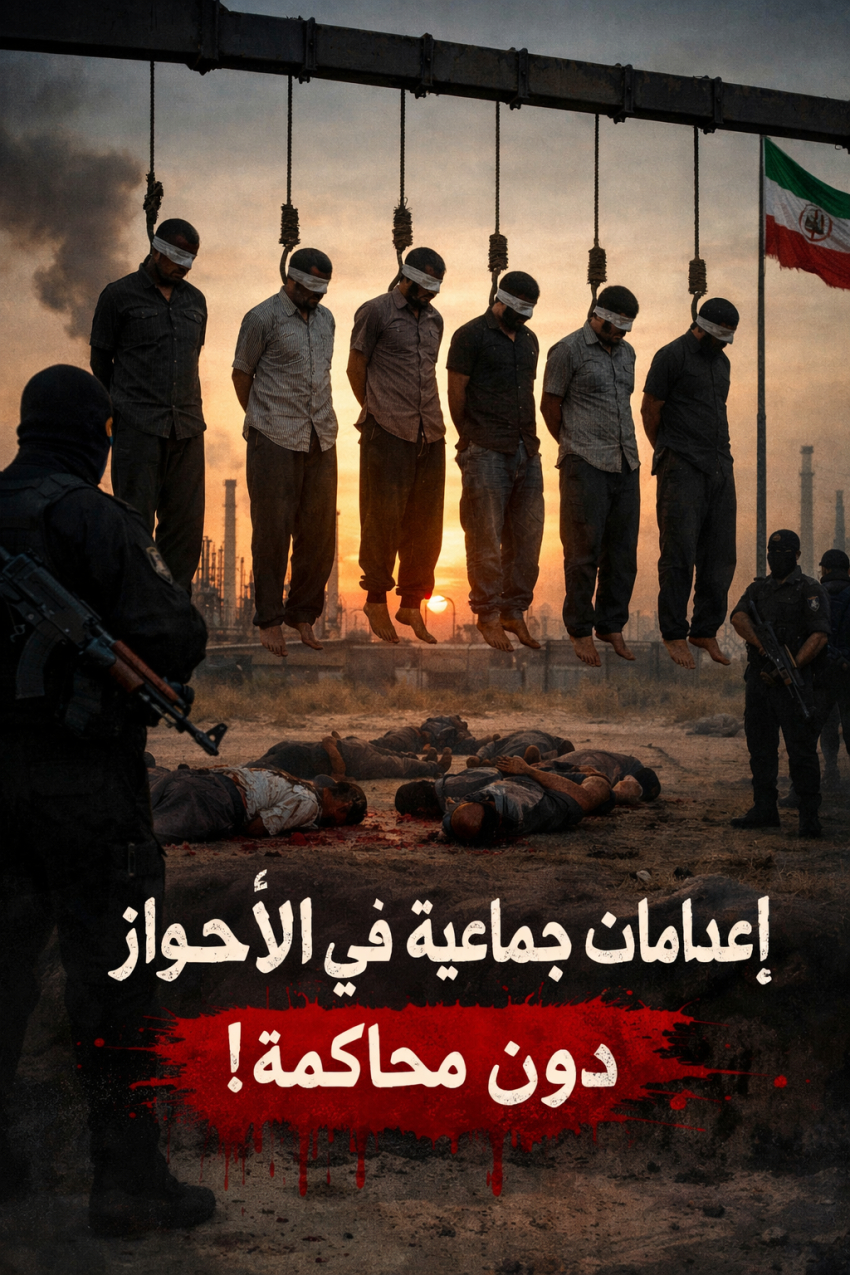
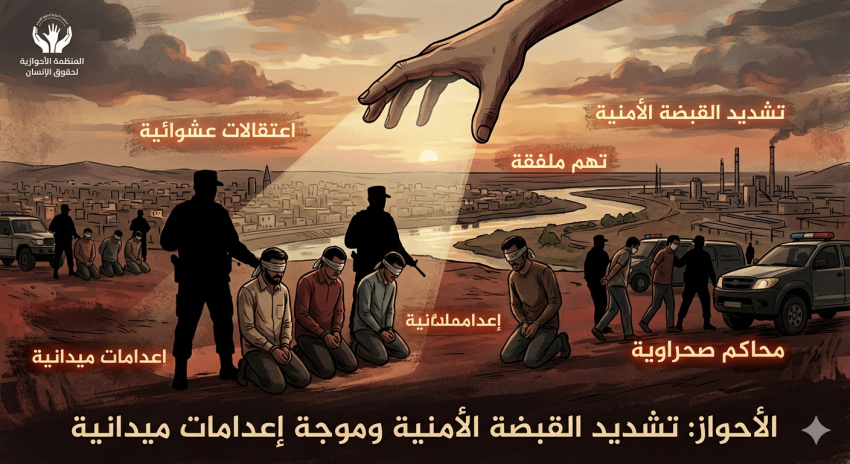
L’Organisation Ahwazienne des Droits de l’Homme (A.O.H.R) lance un appel de détresse urgent à la communauté internationale, au Secrétaire général des Nations Unies, Monsieur António Guterres, ainsi qu’à l’ensemble des instances humanitaires mondiales. Des informations vérifiées font état de l’intention des autorités iraniennes d'exécuter plus de 20 jeunes Ahwaziens suite à des arrestations arbitraires et des procès sommaires ne respectant aucune norme internationale de justice.

I. Raids militaires et disparitions forcées

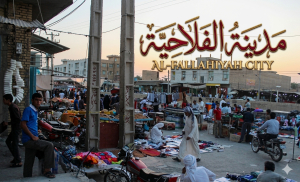
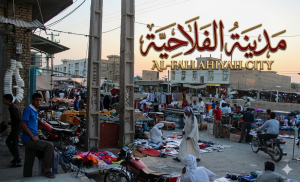
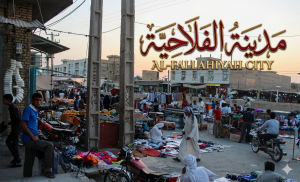
L'escalade a débuté il y a quelques jours lorsqu'une force militaire imposante, équipée d'armes lourdes et de véhicules blindés, a mené des raids brutaux dans plusieurs quartiers et zones rurales de la ville de Al-Fallahiyah. Ces opérations ont donné lieu à des perquisitions violentes dans les domiciles des citoyens, aboutissant à l'arrestation arbitraire de dizaines de jeunes, transférés vers des lieux de détention secrets.

II. Simulacres de procès et violations juridiques

Selon les témoignages des familles recueillis auprès du bureau des relations publiques des services de renseignement (Stad-e Khabari), les autorités ont notifié que les détenus ont fait l'objet de « procédures judiciaires accélérées » sous le régime de la loi martiale. L'A.O.H.R souligne les violations majeures suivantes :

  • Privation de défense : Les détenus ont été privés du droit de mandater un avocat ou de communiquer avec leurs familles.

  • Accusations infondées : Des chefs d'inculpation de « collaboration avec l'étranger » ont été retenus, un prétexte récurrent utilisé pour justifier la répression politique.

  • Célérité des sentences : Des condamnations à mort par pendaison ont été prononcées quelques jours seulement après les arrestations, confirmant le caractère purement arbitraire de ces jugements.

III. Black-out médiatique et contexte régional

L’organisation dénonce l’instrumentalisation par les autorités des tensions régionales et de la distraction de l’opinion publique mondiale pour commettre ces exactions. Ce processus est aggravé par un black-out médiatique total et des coupures délibérées d'Internet dans la région afin d'étouffer toute alerte sur ces violations.

Recommandations urgentes :

  1. Suspension immédiate : L’A.O.H.R exige l'arrêt immédiat de toutes les exécutions prévues contre les détenus de Al-Fallahiyah.

  2. Enquête internationale : Nous appelons à l’ouverture d’une enquête indépendante sous l’égide de l’ONU sur les conditions de ces arrestations et de ces procès secrets.

  3. Accès humanitaire : Les organisations internationales doivent obtenir l'autorisation de rendre visite aux détenus pour s'assurer qu'ils ne sont pas soumis à la torture ou à des aveux forcés.

L’Organisation Ahwazienne des Droits de l’Homme (A.O.H.R) tient la communauté internationale responsable de tout silence face à ces exécutions imminentes. La vie de ces citoyens est en danger de mort immédiat, nécessitant une intervention mondiale urgente avant qu'une tragédie irréparable ne se produise.

Organisation Ahwazienne des Droits de l’Homme (A.O.H.R)

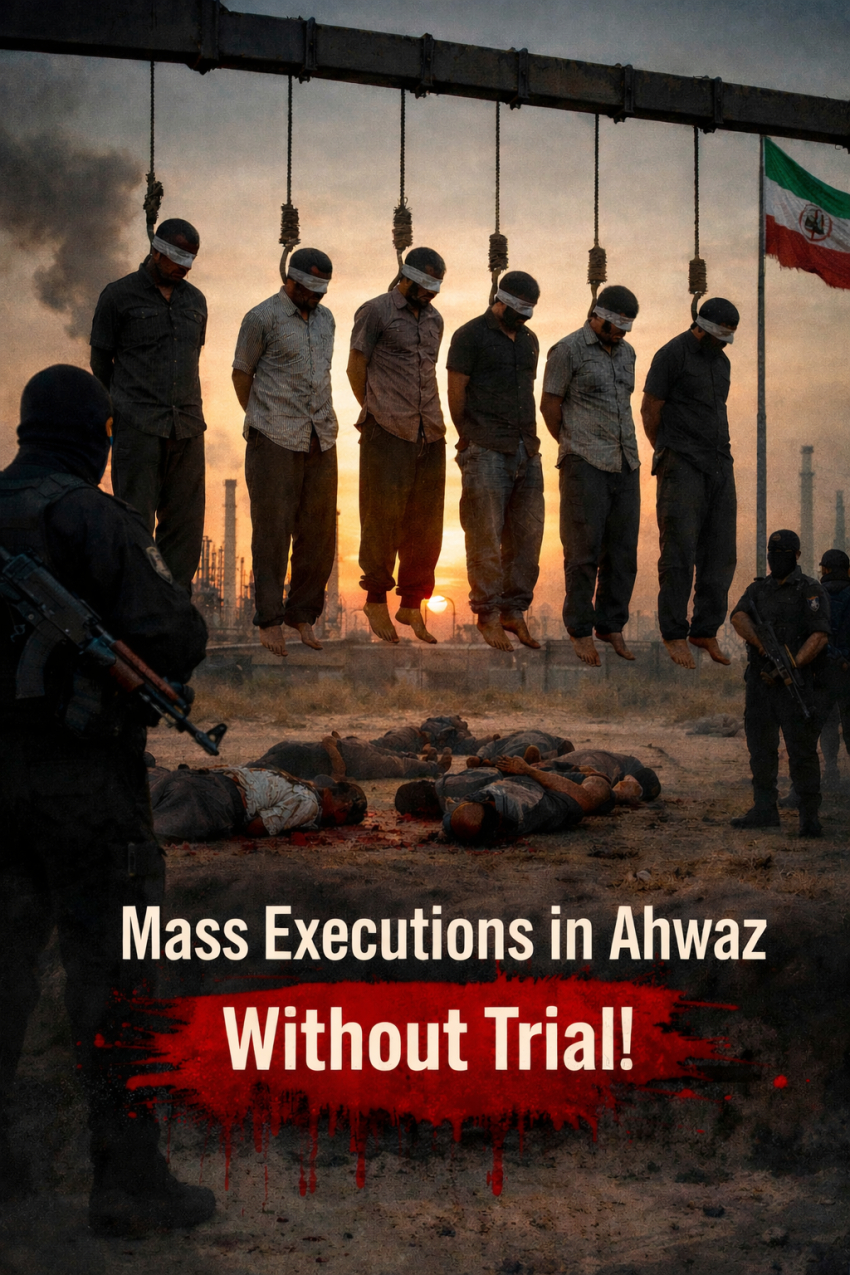
The Alahwazi Organization for Human Rights (A.O.H.R) issues an urgent distress call to the international community, United Nations Secretary-General António Guterres, and all global human rights bodies regarding a looming humanitarian catastrophe. Verified reports indicate that Iranian authorities are preparing to execute more than 20 Ahwazi youths following arbitrary arrests and trials that fundamentally lack international standards of transparency and due process.

I. Military Raids and Enforced Disappearances

The escalation began several days ago when large military and security forces, supported by armored vehicles, launched a series of brutal raids across various urban and rural neighborhoods in Al-Fallahiyah. These operations involved the violent storming of private residences without legal warrants, resulting in the arbitrary detention of dozens of young men. These individuals were transported to undisclosed detention centers, placing them in a state of enforced disappearance.

II. Summary Trials and Legal Violations

According to testimonies from families who visited the Intelligence Public Relations Office (Stad-e Khabari), authorities confirmed that the detainees were subjected to "expedited judicial proceedings" under martial law. A.O.H.R has identified the following critical legal breaches:

  • Total Denial of Legal Counsel: Detainees were barred from appointing lawyers or communicating with their families.

  • Fabricated Charges: Allegations of "collaboration with external enemies" were leveled against them—a recurring pretext used by the state to justify political repression.

  • Summary Sentencing: Death sentences by hanging were issued within days of arrest, underscoring the performative nature of the trials and their lack of credible evidence.

III. Strategic Media Blackout

The organization condemns the timing of this crackdown, noting that authorities are exploiting regional conflicts and international distraction. This is compounded by a deliberate media blackout and severe internet restrictions in the region to prevent news of these violations from reaching international observers.

Urgent Recommendations:

  1. Immediate Stay of Execution: A.O.H.R demands an immediate halt to all death sentences issued against the detainees of Al-Fallahiyah.

  2. International Investigation: We call for an independent UN-supervised inquiry into the circumstances of these arrests and secret trials.

  3. Humanitarian Access: International human rights organizations must be granted access to the detainees to ensure they are not being subjected to torture or coercion.

The Alahwazi Organization for Human Rights (A.O.H.R) holds the international community responsible for any silence regarding these imminent executions. We stress that the lives of these citizens are in grave danger, requiring immediate global intervention before an irreversible tragedy occurs.

Alahwazi Organization for Human Rights (A.O.H.R)

Der Ahwazischer Verein für Menschenrechte e.V. schlägt Alarm und richtet einen dringenden Appell an den Generalsekretär der Vereinten Nationen, Herrn António Guterres, sowie an alle internationalen Menschenrechtsorganisationen, um eine drohende Massenhinrichtung von mehr als 20 ahwazischen Jugendlichen zu verhindern.

Nach dokumentierten Informationen des Vereins führten schwer bewaffnete Militäreinheiten vor wenigen Tagen unter Einsatz von gepanzerten Fahrzeugen brutale Razzien in mehreren Stadtteilen und ländlichen Gebieten der Stadt Al-Fallahiyah (Shadegan) durch. Dabei wurden zahlreiche Wohnhäuser gestürmt und Dutzende Jugendliche willkürlich festgenommen und an unbekannte Orte verschleppt.

Nach wiederholten Nachfragen der Angehörigen bei der Informationsstelle des Geheimdienstes (Stad-e Khabari) wurden diese darüber informiert, dass ihre Söhne wegen angeblicher „Zusammenarbeit mit feindlichen Mächten“ angeklagt seien. In geheimen und rasant durchgeführten Verfahren nach dem Kriegsrecht seien bereits Todesurteile durch Erhängen ausgesprochen worden, deren Vollstreckung in den kommenden Tagen unmittelbar bevorsteht.

Der Ahwazischer Verein für Menschenrechte e.V. betont folgende Fakten:

  • Verletzung von Rechtsstandards: Den Inhaftierten wurde jeglicher Zugang zu Rechtsbeiständen verweigert. Die Urteile basieren auf konstruierten Vorwürfen und erzwungenen Geständnissen ohne jede Verteidigungsmöglichkeit.

  • Informationsblockade: Die Behörden nutzen die regionale Instabilität sowie gezielte Internetabschaltungen und eine Nachrichtensperre aus, um diese Verbrechen fernab der Weltöffentlichkeit zu begehen.

  • Dringender Handlungsbedarf: Wir fordern die internationale Gemeinschaft auf, sofortigen diplomatischen Druck auf Teheran auszuüben, um diese völkerrechtswidrigen Hinrichtungen zu stoppen.

Es bedarf einer sofortigen internationalen Untersuchung, um das Leben dieser Bürger zu schützen. Schweigen angesichts dieser Gräueltaten gibt dem Regime grünes Licht für die Fortsetzung der systematischen Verfolgung der ahwazischen Bevölkerung.

Der Ahwazischer Verein für Menschenrechte e.V.