The Ahwazi Organization for Human Rights condemns what it describes as policies of deliberate environmental destruction and the theft of river water in northern Ahwaz. It stresses that their consequences extend beyond the deterioration of water, land, and air to affect Ahwazis’ health, livelihoods, and ability to remain on their land. The Organization considers the depletion of the resources essential to life, and the pressures driving families away from agricultural communities, to constitute a process of “slow death” that raises serious concerns about the future of the Arab presence and the demographic composition of Ahwaz.
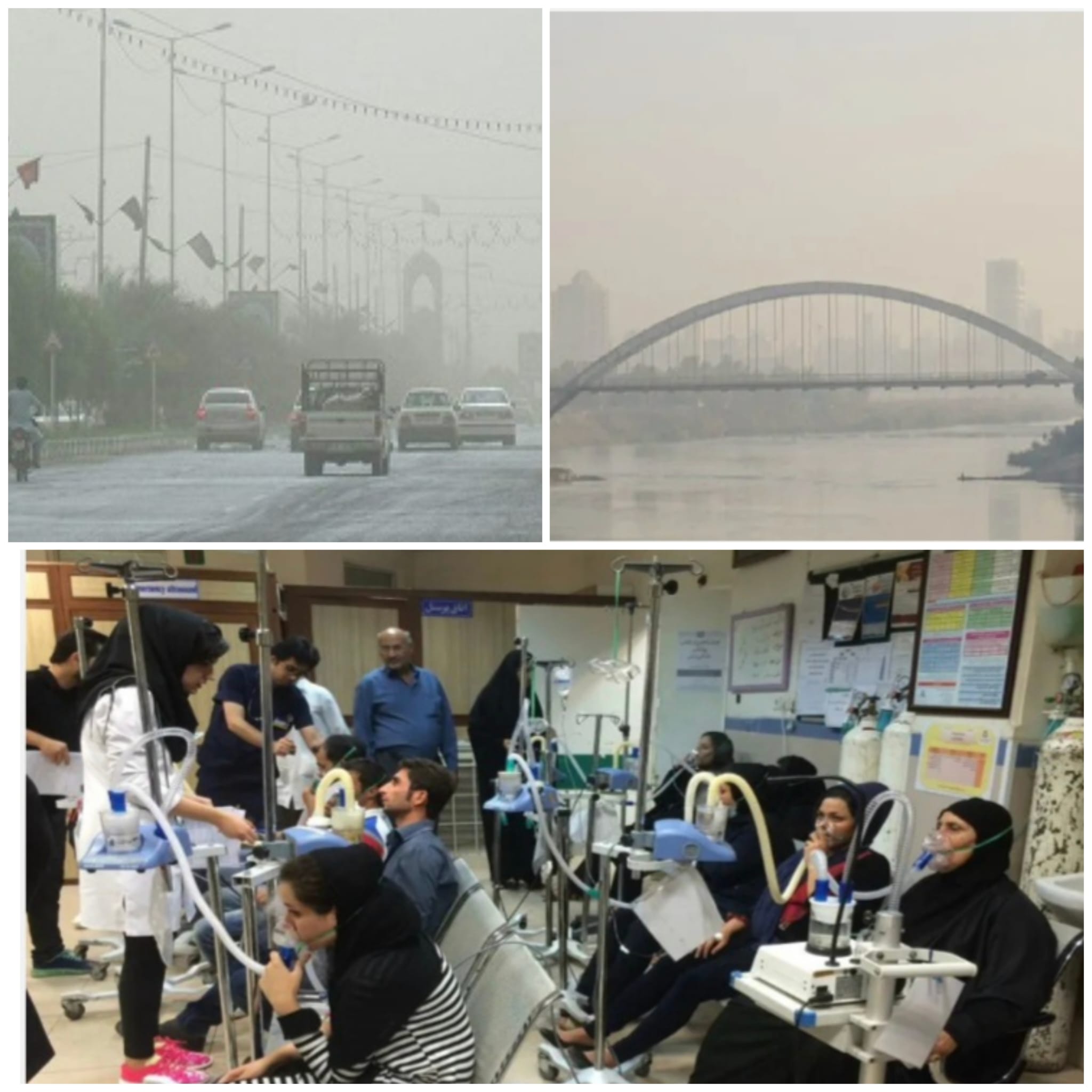
This statement follows the announcement of 920 visits to medical centres for cardiac and respiratory problems within 24 hours—a 10% increase compared with ordinary days—according to health figures published on November 18, 2026. The figure refers to medical visits and does not necessarily represent an equivalent number of individual patients or hospital admissions.
The Organization emphasizes that this is not merely a matter of pollution readings. It concerns people losing the conditions necessary for a safe and dignified life: safe water, productive land, stable employment, healthcare, and the ability to educate their children and remain in their communities.
The Organization maintains that any assessment of water policies must examine their cumulative effects on the Arab population and investigate whether decisions concerning water diversion and restrictions on local water use involve discrimination or the targeting of their economy and continued presence. It also calls for an examination of the demographic effects of displacement associated with the loss of water and land, including whether these consequences were foreseeable and known to decision-makers, or were intended outcomes of their policies.
The Organization describes the diversion of river water outside its natural basins, when carried out at the expense of residents’ needs and essential environmental flows, as “the theft of river water.” It calls for full disclosure of dam, canal, and water-diversion projects; the quantities transferred to central Iran; the beneficiaries; and their agricultural, industrial, and tourism-related uses.
Studies and reports have examined the diversion of part of the Karun River basin’s water to central Iran. A communication by United Nations experts also raised concerns about the effects of decades of dam construction and water diversion on water availability, health, agriculture, livelihoods, and biodiversity.
The Organization rejects placing the burden of water scarcity on Ahwazi farmers without scrutinizing the policies governing resource allocation. It calls for the publication of decisions prohibiting or restricting local farming, together with their stated grounds, and for comparison with water allocations to beneficiary projects outside the region to assess equitable distribution and any potential discrimination.
Reports link declining water flows and the drying of wetlands to land degradation and the expansion of dust sources, in a crisis shaped by the interaction of water policies, drought, and climatic pressures. Studies have also examined the effects of rising salinity in the Karun River on agriculture and date-palm groves.
The Organization considers the loss of groves and crops to be more than an economic harm detached from people’s lives. It represents the loss of food, income, and an agricultural and social heritage rooted in the land.
It calls for an independent, comprehensive assessment of the number of dead and damaged date palms, the area of farmland taken out of production, and the decline in crop yields over clearly defined periods. It stresses that these losses must be documented before aggregate figures—including claims that tens of millions of date palms have been lost within Ahwaz—are adopted, so that demands for compensation and accountability rest on verifiable evidence.
The Organization warns of the consequences of declining freshwater flows and rising salinity in areas connected to the estuary. Reduced river discharge weakens resistance to the intrusion of saline Arabian Gulf water, threatening irrigation water, soil, and date-palm groves. Studies have also examined the role of the Gotvand Dam in increasing salinity in the Karun.
The Organization emphasizes that the accurate description of this process is saltwater intrusion as freshwater flows weaken—not an assertion, without evidence, that Gulf water is being deliberately pumped into the Karun or that the entire river has reversed its course. It calls for independent salinity monitoring, publication of measurement results, and an assessment of the contribution of dams, diversions, and different discharges to deteriorating water quality.
The Organization stresses that families moving from villages to cities under the pressure of losing water, land, and employment should not automatically be described as voluntary migrants. The UN experts’ communication referred to information concerning damage to agricultural livelihoods, farmers falling into poverty, and some being compelled to sell their land and move to marginalized settlements on the outskirts of cities.
The Organization considers that the depopulation of rural areas, if it continues under the pressure of environmental degradation and the loss of livelihoods, threatens the cohesion of Arab communities and their relationship with their land, and may have long-term demographic consequences. It calls for an investigation into these effects and into any policies intended to bring them about or any deliberate failure to prevent them.
It also warns of the risks of unemployment, poverty, and children dropping out of education among affected families. It calls for an independent survey of displaced households, their incomes, employment opportunities, and children’s school enrolment, rather than leaving these consequences undocumented or relying on unverified poverty and illiteracy rates.
Separate monitoring data showed pollution exceeding permissible limits in 10 cities in northern Ahwaz, with the following Air Quality غIndex readings:
City Air Quality Index
——:
Al-Amidiyah | 152 |
Al-Sus | 145 |
Gotvand | 143 |
Al-Huwayzah | 141 |
Al-Muhammarah | 140 |
Ahwaz | 130 |
Ma‘shour | 118 |
Andimeshk | 112 |
Dezful | 107 |
Al-Fallahiyah | 105 |
Al-Amidiyah was classified in the red category, unhealthy for all population groups, while the other nine cities were classified as unhealthy for sensitive groups. These are Air Quality Index values, not percentages. The readings and the medical-visit statistics are not presented as figures from the same day.
The Organization calls for an independent health investigation into residents’ complaints concerning asthma, shortness of breath, skin diseases, and cancers, and for the publication of diagnostic data, geographical distributions, and information on environmental exposures. It emphasizes that establishing an increase in a particular disease, or attributing it to a specific source of pollution, requires data and research. Their absence calls for investigation—not the dismissal of complaints or the prejudgment of findings.
The Ahwazi Organization for Human Rights calls for measures that include:
1- Halting water diversions shown to harm residents’ needs, agriculture, rivers, and wetlands.
2- Publishing data on dams, canals, the quantities of water diverted, their destinations, and their uses.
3- Investigating equitable water allocation and any discrimination affecting Arab Ahwazi farmers and communities.
4- Assessing losses to date palms, crops, and land; compensating verified damage; and implementing land-restoration programmes.
5- Providing healthcare and conducting independent studies of harm associated with environmental exposures.
6- Documenting displacement and its economic, educational, and demographic consequences, and ensuring safe and voluntary options for affected families, including return wherever it becomes possible.
7- Investigating responsibility for harmful decisions, the extent of prior knowledge of their consequences, and any discriminatory intent or targeting of the population.
8- Ensuring affected people’s participation in decision-making and access to complaints procedures, effective remedies, and compensation.
The Organization affirms that protecting Ahwazis requires protecting the conditions that enable them to remain on their land. Addressing the crisis cannot end with treating patients or announcing pollution readings. It requires ending the policies causing harm, safeguarding resources and livelihoods, and holding those responsible accountable on the basis of evidence.