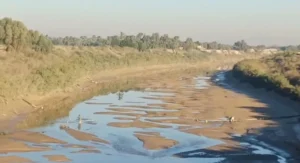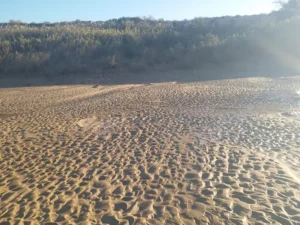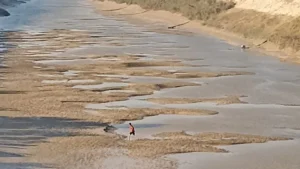
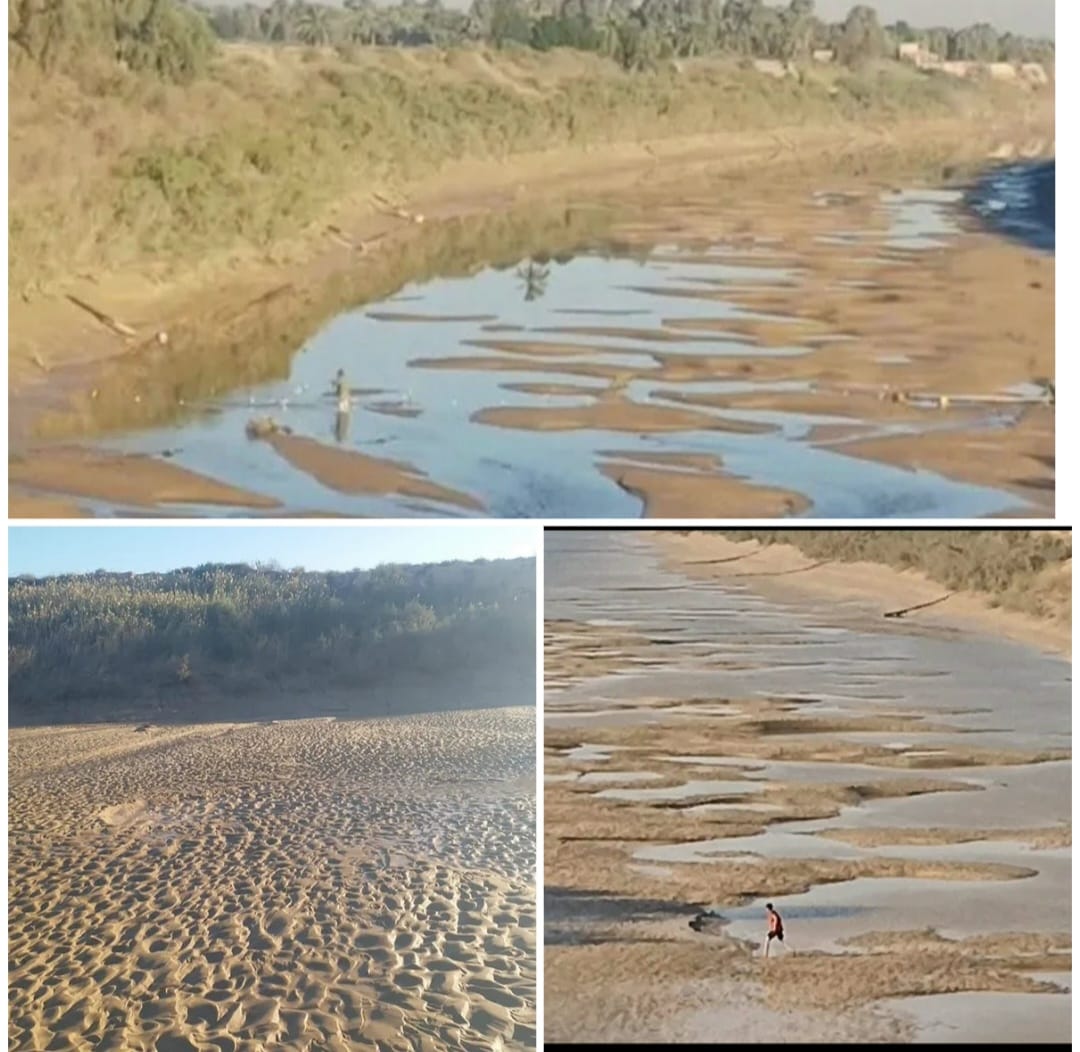
The Al-Suwayra River in the city of Al-Tamimiyah has dried up and its bed is exposed, leaving only scattered muddy pools. Images from the site show a resident crossing the riverbed on foot, where water once flowed. Available information indicates that parts of the river ran dry again just one week after rainfall, which undermines the claim that this is a natural drought.
The situation follows years of construction by the Iranian authorities of water facilities in the upper basin: the Kowsar and Asak dams, the Shahid Rajaei Canal, and most recently the Chamshir Dam, which has entered operation. The implementing bodies had presented these projects as a means of regulating the river’s flow and improving water quality in the lower basin, but residents have seen no sign of this. Water is held back and diverted upstream, and not enough reaches Al-Tamimiyah to keep the river alive.
The Alahwaz Organization for Human Rights (A.O.H.R) believes that what is happening is a deliberate water policy, not an incidental drought. The authorities are aware of the consequences of holding back and diverting water, yet they continue this policy without any published environmental impact studies and without guaranteeing a water share for the city’s residents.
The organization stresses that the damage extends beyond the river itself. The soil has dried out and lost its fertility, desertification is spreading across the surrounding farmland, and the dust storms that already afflict Ahwaz are worsening. According to the organization, Arab Ahwazi farmers in Al-Tamimiyah are prevented from farming on the pretext of water scarcity, then pressured to abandon the land they inherited from their forefathers and migrate to other cities after losing their only source of income. The organization considers that this policy targets farmers on the basis of their Arab national identity and aims to empty the land of its Ahwazi owners and seize control of it.
gal Basis*The organization considers these actions to violate Iran’s obligations under international treaties to which it is a party:
– The two International Covenants (since 1975): Article 1(2) prohibits depriving any people of its own means of subsistence. The International Covenant on Economic, Social and Cultural Rights guarantees the right to an adequate standard of living (Article 11) and the right to health (Article 12), and its Committee, in General Comment No. 15, has interpreted these as including the right to water without discrimination in its distribution.
– The International Convention on the Elimination of All Forms of Racial Discrimination: Article 5 guarantees the enjoyment of economic and social rights, including the right to own property, without discrimination on the basis of national or ethnic origin. Depriving Arab Ahwazi farmers of water and pushing them off their land calls for accountability under this obligation.
The organization calls for an immediate halt to the diversion of the basin’s water and the restoration of the river’s flow; a guaranteed water share for Ahwazi farmers; permission for them to return to farming their land; an end to any pressure forcing them to migrate; compensation for those affected; and an independent, transparent study of the impact of the dams and canals. It also calls on the UN Special Rapporteurs on the human right to water and on human rights and the environment to investigate the situation.