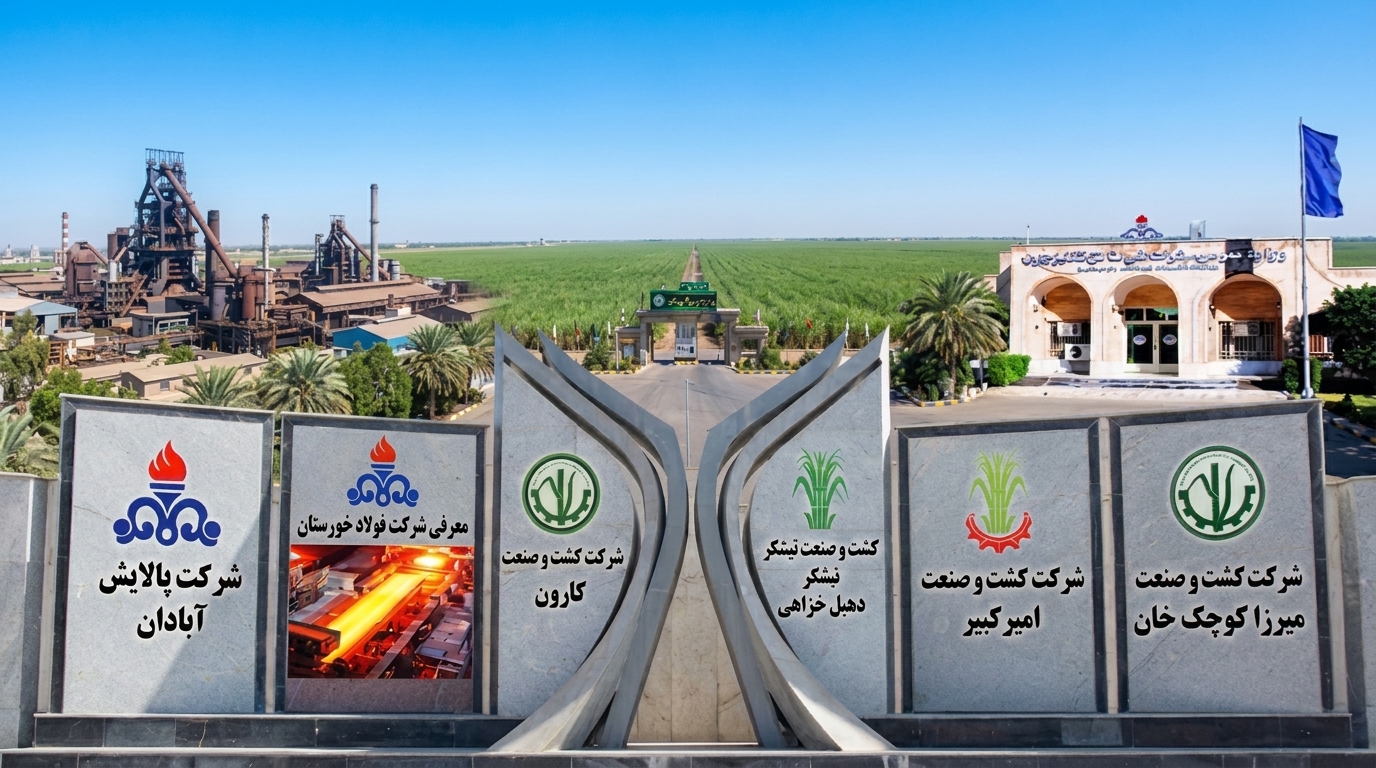
Ahwazi cities, including Mahshahr (Ma’shur), Khorramshahr (Al-Muhammara), Abadan, Al-Huwaiza, Shushtar, Shush (Susa), and Shadegan (Al-Fallahiya), are witnessing systematic and widespread policies practiced by the Iranian authorities against the indigenous Arab civilian population. These violations are most evident in vital employment sectors such as oil companies, major factories, and sugar cane companies, such as the Haft Tappe Sugar Cane Company in the city of Shush. Field data shows that the proportion of Arab workers in these companies does not exceed 5 to 7 percent, and they are frequently restricted to the lowest jobs such as cleaning and guarding, despite the presence of Ahwazi Arab competencies with higher educational degrees and precise specializations that perfectly match work requirements in these vital sectors.
In contrast, the authorities adopt a blatant exclusionary approach, clearly illustrated by practices such as when the oil company, years ago, hired 1,000 people at once, bringing in 800 individuals from outside Ahwaz and employing 200 Persian settlers inside the region without hiring a single Ahwazi citizen. These policies are not limited to depriving the indigenous population of job opportunities; they are accompanied by a package of generous privileges granted by the authorities to Persian newcomers to encourage them to settle—such as providing free housing in special neighborhoods equipped with all social welfare amenities, granting multiple salaries, and providing numerous free tourist trips to northern Iran.
These systematic policies are part of a broader strategy targeting the economic and social structure of the civilian population, accompanied by systematic persecution, silent forced displacement, and severe deprivation of fundamental rights. The lack of income and the impoverishment of families have led to a sharp rise in illiteracy and school dropout rates, as many children from deprived families were forced to leave school and seek a livelihood through marginal jobs such as street vending in markets.
From an international legal perspective, these adopted practices amount to grave crimes that violate the provisions of international human rights law, specifically the International Convention on the Elimination of All Forms of Racial Discrimination, and the International Covenant on Economic, Social and Cultural Rights, which guarantees the right to work and equal opportunities without discrimination. More dangerously, these systematic violations directed against a specific population group rise, according to Article 7 of the Rome Statute of the International Criminal Court, to the level of crimes against humanity; specifically the crime of “persecution” through the deliberate deprivation of fundamental rights on ethnic and national grounds, and the crime of “forced displacement” and systematic demographic change by draining sources of livelihood and creating an expulsion environment for indigenous residents in favor of settling newcomers. This calls for urgent legal and international action to halt these policies and hold their perpetrators accountable.
The Alahwazi Organization for Human Rights (A.O.H.R)