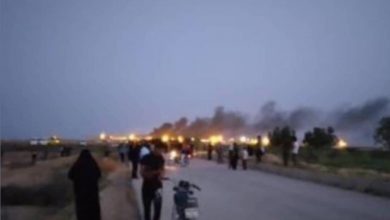
Amidst the ongoing and massive labor and popular protests staged by Ahwazi citizens in front of the Sugar Cane Company (Da’bal Al-Khazaici) for the third consecutive week, the true and catastrophic dimensions of these alleged investment projects are being uncovered. Based on reports and international documentation issued by Minority Rights Group International (MRG) and published through the United Nations international database (Refworld), what is being marketed under the guise of “development projects” is nothing more than an extension of systematic colonial and settlement policies aimed at altering the identity and geography of the region and impoverishing its indigenous population.
First: Historical Roots – From the Pahlavi Core to the Intensive Expansion of Khomeini’s Regime
Historical and human rights documentation indicates that sugar cane cultivation projects in the geography of Ahwaz were never of innocent economic viability; rather, their first foundations were laid during the era of the last Shah (Mohammad Reza Shah Pahlavi), with the first major core of that industry established in the early 1960s. Although that period witnessed the launch of the first historical project, the regime of the Islamic Republic later expanded this scheme in a terrifyingly intensive manner, using it as a tool for settlement and demographic engineering to uproot and displace indigenous Arab inhabitants and bring in Persian settlers from Persian cities to replace them.
Second: The 2005 Document and the Comprehensive Uprising of Dignity – The Bloodiness of Repression and the Heroism of Ahwazis
The danger of settlement projects in Ahwaz is not limited to economic impacts, but extends to systematic policies decreed at the highest levels of the state. This is clearly evident in the historic April 2005 uprising that swept and covered all Ahwazi cities without exception, sparked following the leakage of an official document (known as the “Abtahi Document”) explicitly stating government plans to displace and uproot two-thirds (2/3) of Ahwazi Arabs from their homes over a decade and replace them with settlers of Persian ethnicity.
The Iranian authorities met this peaceful uprising with unjustified bloody repression. Based on statistics issued by Shahid Chamran University in the Ahwazi capital, the uprising resulted in 220 martyrs from among the people of Ahwaz and the arrest of over 150,000 citizens, serving as conclusive proof of the scale of systematic governmental brutality against the Ahwazi people.
Third: Falsification of Areas and Manipulation of Official Statistics
The Iranian authorities attempt to evade international accountability and condemnation by withholding accurate data and manipulating official figures published regarding the actual areas allocated for sugar cane projects. While promoting incomplete data, field data and documented Ahwazi testimonies confirm that the actual areas seized for sugar cane projects and their affiliated industries reach multiples of the officially announced areas, in a large-scale plunder of the Ahwazi people’s resources.
Fourth: Falsification of Population Numbers and Erasure of Identity
As part of a policy of systematic erasure, the Iranian authorities constantly resort to falsifying demographic facts and fabricating the true numbers of the indigenous Arab population. They falsely claim that the number of Ahwazi Arabs does not exceed “two million,” whereas realistic statistics and studies confirm that the true number of Ahwazi Arabs in the region ranges between 10 and 14 million people, in a futile bid to diminish their demographic weight and cover up the crimes of systematic racial discrimination, marginalization, and impoverishment.
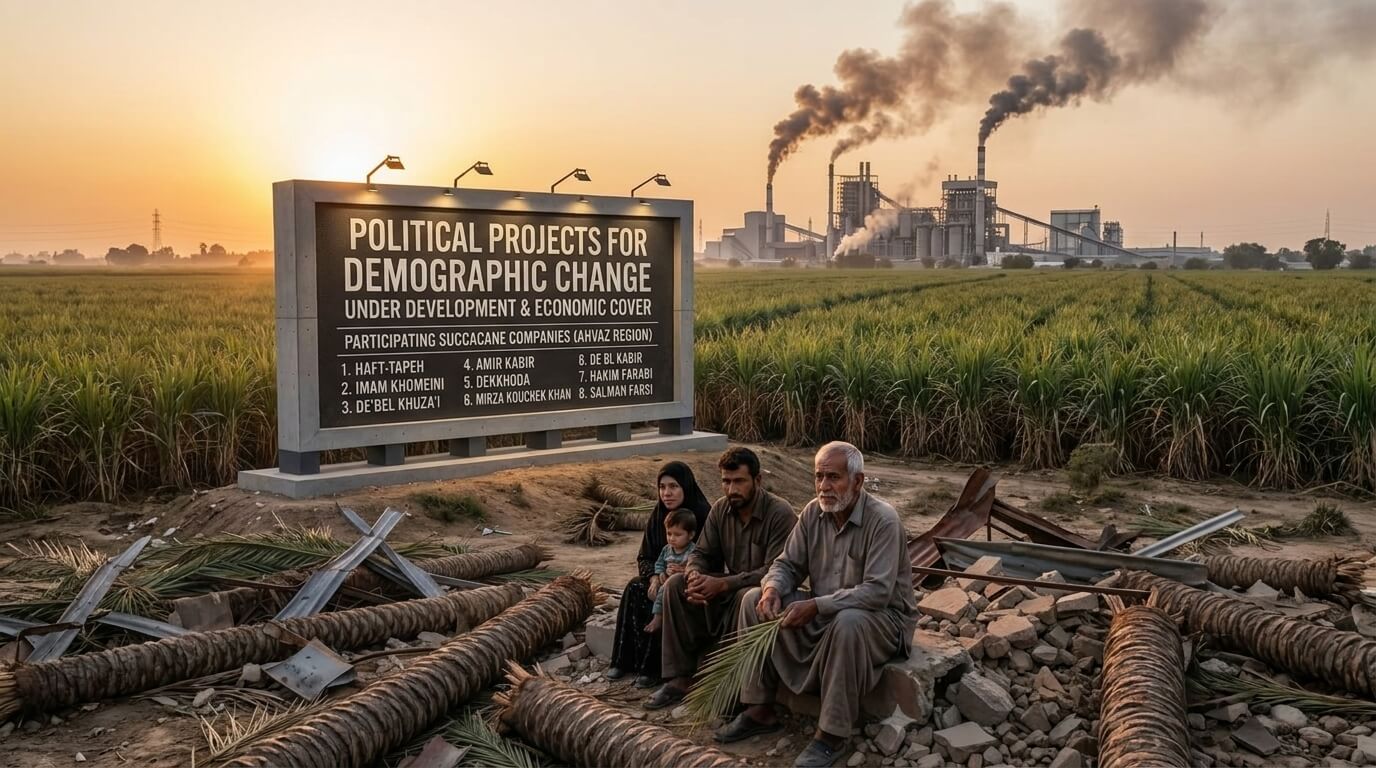
Fifth: Map of Sugar Cane Companies in Ahwaz (Ordered from Oldest to Newest)
To implement these agendas, the following agricultural and industrial companies were established (ordered ascendingly by establishment date):
-
Al-Qumat Sugar Cane Company (شرکت کشت و صنعت نیشکر هفتتپه): The oldest (Mohammad Reza Shah era, 1961), spanning over 24,900 hectares near Shush (a symbol of historic labor struggle).
-
Dehkhoda Sugar Cane Company (كشت وصنعت دهخدا): 11,369 hectares north of Ahwaz.
-
Hakim Farabi Sugar Cane Company (كشت وصنعت حكيم فارابي): ~15,000 hectares south of Ahwaz (established in 1994).
-
Khomeini Sugar Cane Company (كشت وصنعت خميني): ~15,300 hectares in Shushtar.
-
Amir Kabir Sugar Cane Company (كشت وصنعت أميركبير): ~15,000 hectares on the Ahwaz-Khorramshahr road (opened in 2000).
-
Salman Farsi Sugar Cane Company: Among the subsequent major companies.
-
Da’bal Khazaici Sugar Cane Company (كشت وصنعت دعبل خزاعي): ~12,000 hectares (the focal point of current labor protests due to layoffs and employment discrimination).
-
Mirza Kuchak Khan Sugar Cane Company: Among the latest links in the settlement expansion in southwestern Ahwaz. (In addition to affiliated manufacturing companies such as Alcol Razi and others.)
Sixth: Land Confiscation and Force of Arms – Displacement of Hundreds of Thousands
According to reports by Minority Rights Group International (MRG) via Refworld, the establishment of this network was achieved through the violent seizure of village lands, leading to the uprooting and displacement of 200,000 to 250,000 Arab Ahwazi citizens (with local estimates indicating over half a million citizens) who were given meager compensations and driven to the outskirts of cities.
Seventh: Devastating Social and Environmental Consequences (Poverty, Illiteracy, and Crime)
These policies generated a humanitarian catastrophe characterized by: extreme poverty and illiteracy resulting from land loss, rising rates of divorce and crime, and the spread of drug addiction as a tool to destroy the social fabric of the youth.
Eighth: Current Protests and Their Repression
Ahwazi workers and citizens continue their protests for the third week in front of the (Da’bal Khazaici) company, rejecting employment evasion and the substitution of settlers, while their peaceful protests have been met with live ammunition and arbitrary arrests.
Ninth: Demands of The Alahwazi Organization for Human Rights (A.O.H.R)
Based on international reports and documentation issued by Minority Rights Group International (MRG) via the United Nations platform (Refworld), The Alahwazi Organization for Human Rights (A.O.H.R) declares the following:
-
Condemnation of Ethnic Cleansing and Demographic Change: Rejection of all settlement and forced displacement projects represented by sugar cane companies and their declared and undeclared plans (such as the 2005 documents).
-
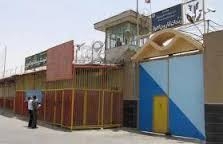
Immediate Cessation of Repression: Demanding the Iranian authorities to cease using violence and live ammunition, and to release all detainees and workers.
-
Restoration of Rights and Property: Affirming the right of displaced Ahwazi families to reclaim their usurped lands and receive fair compensation.
-
International Community and UN Action: Calling upon international bodies and human rights organizations to adopt these documented facts, expose the manipulation of land areas and population numbers, and open an international investigation into crimes of discrimination and systematic displacement against the Ahwazi people.
The Alahwazi Organization for Human Rights (A.O.H.R)